Varius Studio E-Commerce Build
DMI
- Stripe
- React/TypeScript
- NodeJS
Solution architecture and web development
Varius Studio was part of Varius, a blockchain-adjacent company working toward an early vision of digital asset immutability, a precursor to what later became known as NFTs. Their ambition was to create a marketplace and supporting infrastructure where digital objects (artwork, media, in-game items, etc.) could carry persistent value. The larger vision was to integrate this service model into third-party ecosystems such as video games and creative platforms, positioning Varius as a leader in enabling value creation from digital assets.
Project scope and role
While Varius’ internal team focused on the blockchain and digital object layer, our role was to design and implement the e-commerce component of the platform. This involved:
- Participating in the discovery phase, including user story development, UX planning, and systems design.
- Surveying available market options for payment processing and subscriptions.
- Designing a bespoke e-commerce portal tightly aligned with Varius’ API-first philosophy.
Technical stack and implementation
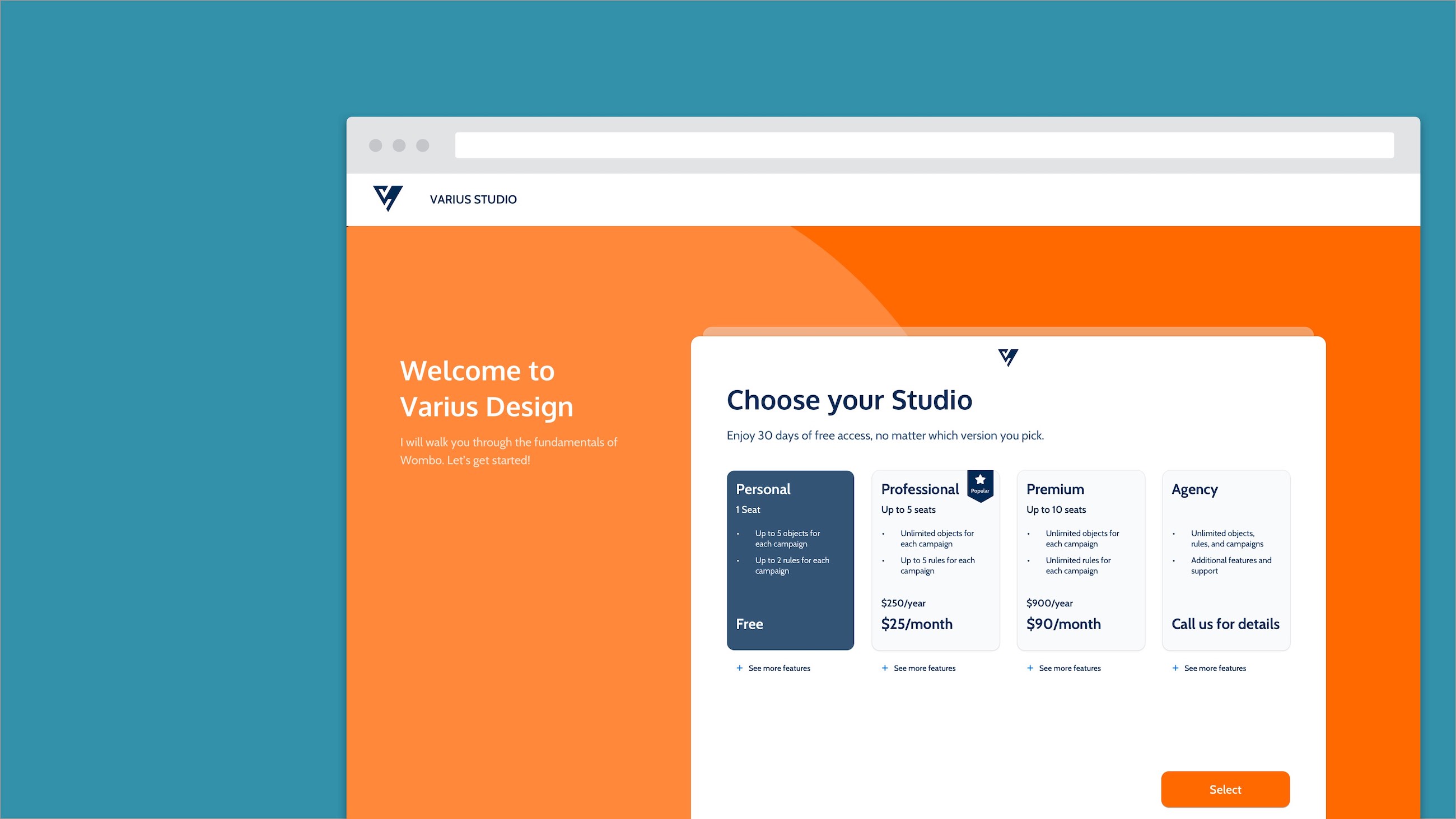
The front end was developed using React and TypeScript, featuring a fully custom UI meticulously designed to align with the Varius brand and product vision. For the payments and commerce layer, we selected Stripe, a newer entrant at the time (circa 2018) but chosen for its robust API-first approach. Our architecture involved directly integrating Stripe for secure payment processing, then building a virtualized product management layer on top of it. This custom layer was essential for handling the product catalog, transaction tracking, and complex hybrid billing models, including bespoke support for both one-time purchases and subscriptions, which Stripe did not natively combine well at the time. To maintain financial accuracy, we implemented a lightweight transactional system within the application to reconcile the product state with Stripe’s billing records, and the entire integration subsequently passed extensive security audits to meet enterprise standards.
Challenges and solutions
Facing the challenge of a hybrid billing model, where Stripe lacked robust, native support for blending one-time and recurring purchases, we engineered a custom abstraction layer to internally track products, purchases, and entitlements, delegating only payment authorization and billing execution to Stripe. Furthermore, to deliver a custom user experience unavailable in rigid, off-the-shelf e-commerce systems like Magento, we developed a bespoke React frontend that presented the marketplace UI and integrated seamlessly with both the Varius blockchain backend and Stripe. Finally, to align with Varius’ broader product strategy emphasizing API-first extensibility and integration, we specifically chose Stripe and architected the entire e-commerce service as a dedicated, API-driven component.
Key outcomes
We delivered a fully custom e-commerce platform that successfully supported Varius’ early exploration into digital asset marketplaces, effectively demonstrating how API-driven commerce could be leveraged to support novel digital product models that fell entirely outside traditional e-commerce patterns. This project anticipated challenges later solved by modern NFT marketplaces, thereby validating the concept of virtualized product layers built atop commodity payment services. Ultimately, the solution highlighted the critical role of robust state management and rigorous security auditing necessary for building fintech-adjacent products that successfully bridge emerging technologies (like blockchain) with established infrastructure (like Stripe).